
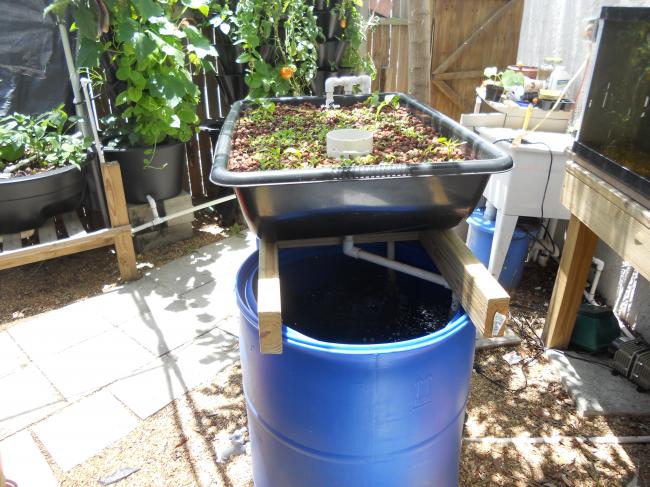
Additional Media Beds at Sahib Aquaponics Research Farm
Adding Additional Media Beds for Increased Growing Space and Extra filtration
Adding additional media beds for increased growing space and extra filtration presented a challenge, especially when you are working with extremely limited space. I noticed that the top of our Koi pond was at present “wasted space”, just waiting to be put to use for growing additional food. I could have just built shallow water culture (SWC), raft beds as our filtration system was already adequate for our needs. However, our Koi are growing rapidly in size and I do not really want to part with them. They feed right out of my hand and provide such stress relief that it is hard to describe. With the temperature’s increasing as we enter the hurricane season, the extra feed that the Koi are enjoying, any extra filtration during these months would be extremely beneficial in keeping our Aquaponics created Ecosystem in balance. Adding media beds should help meet this need.
David Hart, my fellow Aquapon friend and I discussed what would be appropriate to build over the Koi pond that would be both functional as well as cost effective. We decided that we would replicate the Sahib Zero Lot Hybrid Aquaponics System grow beds on both sides of the fish tank. Not only would these provide us with additional growing area and the much sought after filtration, helping us use as much of the valuable fish waste within the system as possible, we would also be able to substantially increase aeration by using the modified Affnan bell siphons. We have built the first section of the media beds and they are operational, functioning just a s planned. Here are a few photos that we are sharing and a brief video of the new media beds now in operation .
Sahib is happy to share with you the endless possibilities of how to grow your own food locally and naturally without the use of harmful pesticides and chemical fertilizers by using these Aquaponics hybrid urban growing systems. These Aquaponics hybrid urban growing systems can be scaled to size and can be replicated. They can be modified to be operated off grid as well as expanded as the need arises. Such systems can be used to have fresh food at home, work or anywhere they are set up. They are excellent tools to use as teaching aids so that we can empower the future generation with the knowledge to grow their own food locally by natural means. Sahib’s Aquaponics hybrid urban growing systems can be the basis of feeding the family, the community as well as provide income to the urban farmer. Sahib will also share how such systems can be used in urban retail economy, both by food establishments as well as food/produce retail outlets to enable the consumer to purchase food that has been grown locally and by natural means. Food that is “live” (a new twist on the label “Fresh”), and the type recommended by most medical and health professionals as what we should be eating.
Sahib is using the profits from Aquaponics training workshops by Aquaponics Urban Gurus to fund the development of Aquaponics for the poor hungry world villages. He has set up a separate group for this called “Feed Hunger Now” (see link below). Will you help join Sahib…can we work together in this venture? What ideas do you have to help towards this goal?
You are welcome to share your ideas and designs as to how you would suggest we increase additional growing space and/or make improvements. You can submitt them to sahib@sahibaquaponics.com.
God bless,
 Best Western Orlando East Inn & Suites
 Crestwood Suites of Orlando-UCF Area
 Days Inn N Orlando/Casselberry
 Park Plaza Hotel
 Thurston House Bed and Breakfast